Komodo Dragons & Indonesia


The place we’re staying in is quirky. In a good way. 
Most unusual. Kind of a tree house.

Up a narrow stone path and a slippery muddy trail. 

Between rocks so tight that Stan had to turn sideways to get through. 


And this - after the taxi dumped us off on a side road god knows where. 

In the pouring rain. 


Stan - with his pack - and folding guitar.


The bathroom is open to the sky. 

When it rains here, it comes down with intense tropical enthusiasm. For good measure, the toilet is placed just beneath the runoff from the roof of the bungalow. 

Timing is everything. 


There's a bar, but it only had 1 beer. (luckily a large one-)

We took it.


But the place has a great balcony. 

I keep thinking - where the heck ARE we? 
I think we're the only ones here.


Watching the scene below. 

Pretty pleased with our choice of being on the hill. 


We're overlooking the city of Labuan Bajo. 
On the edge of the island of Flores, Indonesia. 

Ships and containers. 
Tin roofs and wooden boats. Lots of both. 


It's a working town. 

When it’s not raining, sounds of an impromptu soccer game. 
Hammering from the boatbuilders. 
More enthusiastic roosters. 
Motorcycles.

Cheering from the gang watching the soccer match. 


All sounds of a regular city, doing the things they do everyday. 

And we're SO FAR from everywhere we know.


Handmade boats and lumpy green islands. 


Lots of cool old wooden boats. 
Fishermen, construction, mosques - and the occasional small dive shop. 

The scuba diving here, however - is incredible. 


Sharks and rays and turtles and corals and seahorses - SO much to see!
It's a complete wonder world. We spend a LOT of time underwater.

Then, someone mentioned we could go snorkeling with giant manta rays, so we signed up. 
We didn't realize we'd be seeing Komodo dragons, too. 


There weren't a lot of takers on the trip.
A lovely old traditional Phinisi wooden boat.


Over 10,000 of the 17,000 islands in Indonesia are uninhabited. 

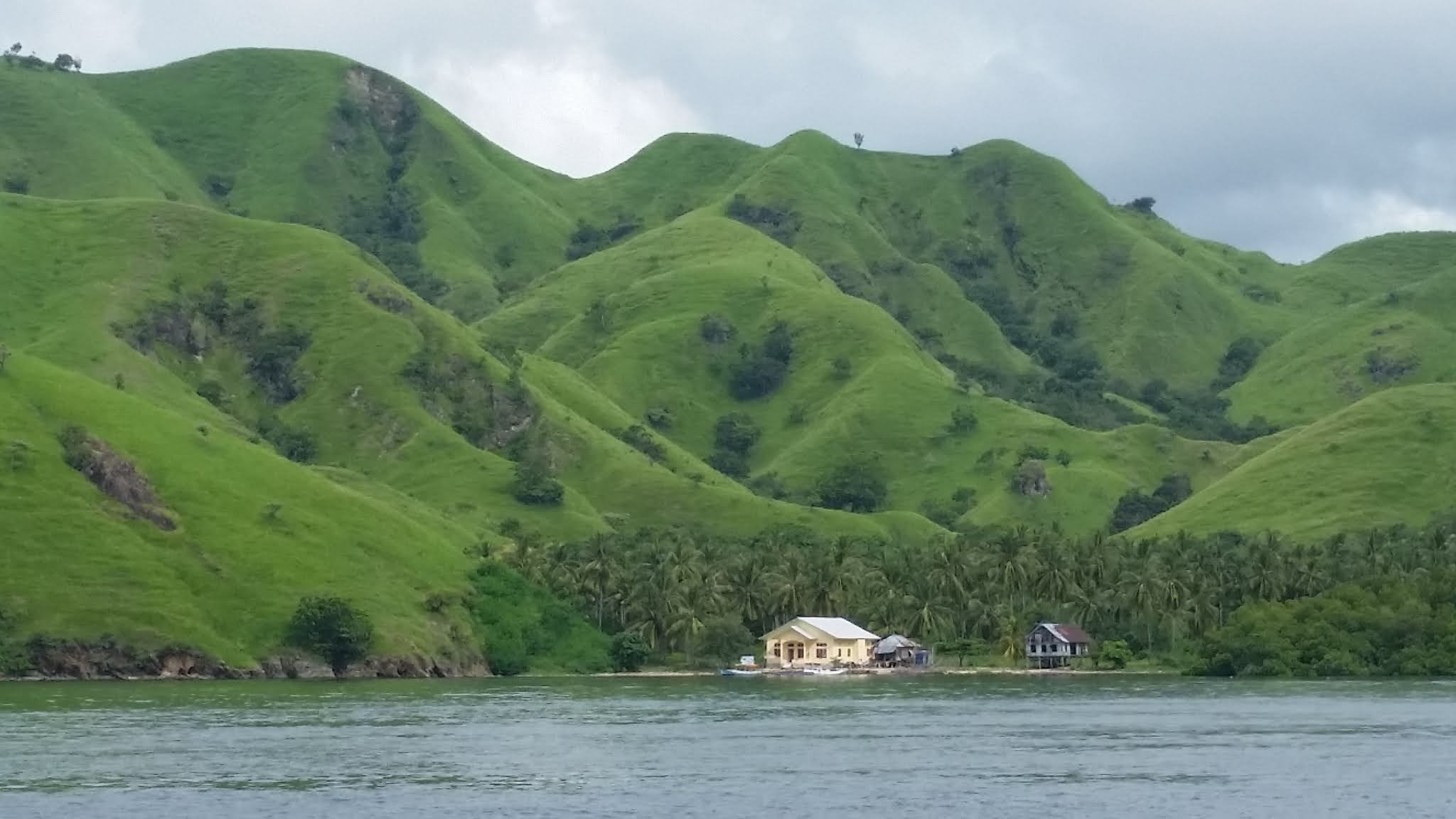
Islands in all directions, and so very green this time of year.


Even with the inhabited ones, transport between the islands is NOT straightforward. 

I looked into going to Raja Ampat and the Banda Islands. 
The best I could find was 39 hours from here, with 6 transfers! 

All - within the same country.


But - back to the Komodo dragons. 


When we get off the boat, we see this sign. 
Crocodiles? - As if Komodo dragons aren't enough.


Looking for crocodiles.

These guys are dangerous. Shark-like teeth.
Their saliva is saturated with toxins. There's no anti-venom.

And - they're cranky.


A cranky Mama Komodo.

On the island, Komodo dragons are just - well, lying around. 
On trails. Under laundry lines.

We had to be accompanied by a local guy with a big stick. 

I can't believe people just - live casually around them. 


These are under someone's kitchen!

Plus, Komodo is home to poisonous snakes. 
Vipers, kraits, and cobras. 
Pythons, too.

Unbelievably, they allow camping here.
-Really.


Then: GIANT MANTA RAYS:

They call it "Manta Point" for a reason. 

You could FEEL and SEE the currents working beneath the surface. 
The waters churned and swirled. 

The captain cut the engine and we - jumped off.


The swirling water creates a sort of jet stream of fish and plankton. 

We were being carried along with the current, and the mantas came towards us, huge mouths wide open, feeding on the plankton. 


They are HUGE. 

2-3 meters across. 

Their mouths are wide open. 


Dozens of them. 

Beneath us. 

Next to us. 

Around us. 


We struck manta gold. 


Something I’ve never seen before, even though we have seen mantas in other places. 


WAY cool. I was totally impressed.  

This alone was worth coming for.


Also, dolphins followed us out there, jumping and swimming along with our boat…and there were even sea eagles. A regular nature film in the making.


Just before sunset, we anchored off a mangrove island. 
Around us, hills and islands, green humps in the water, in all directions. 

No lights. 
Just hanging out. 
Waiting for sunset.


As the sun went down, thousands of giant fruit bats begin to appear. 

The ones they call flying foxes.


Over a meter across, enormous. Coming out of the jungle, cruising slowly over our heads, into the night sky. They flew in front of the setting sun, and the rising moon. Each one looked like a miniature "Batman" sign - just so much larger than any I’ve ever seen before. 


Thousands and thousands of hunting bats. 

They come out of the mangroves and head for night feeding on Flores Island. 
Every evening.

 It felt like a classic scene from a zombie film.


And then - we cruised back home to Labuan Bajo. 
In the dark. 
With no lights. 

 The captain says he keeps everything dark so he can see the smaller boats - also with no lights - by the light of the moon. Lovely.

An impressive day. 

Can’t ask for much more than that.


Some day, all of this may be very popular, but for now, it's pretty low key. 


KANAWA

Back in town, we found a small desk in a closet-sized office that advertised stays on an island called Kanawa. It was supposedly located inside the Komodo National Park, which I didn't think was allowed. But supposedly, it had accommodation. No idea. We couldn't find out much about it. Anyway, off we went. 


SO glad we took the chance! 

A small wooden boat picked us up with our packs. 
En route, there was engine trouble. 

Both the captain and first mate dived in to sort it out, leaving just us on the boat. 


Turns out, Kanawa is tiny. 

Simple wooden cottages for rent - no electricity on the island. 
And a simple restaurant. 

But the best snorkeling I've EVER come across. 


Right from the deserted beach - or from the handmade jetty. 


The place is so ridiculously laid-back and relaxed. 


The weather not as hot as I’d feared. Without electricity, there were no fans. 

Yes, the nights were a bit heavy and still under the mosquito netting, but - worth it. 


I snorkeled every few hours, and loved it. 


We saw our first sting ray before we even got off the boat. 


Underwater was even better. 

Small black-tip sharks, a wonderful octopus, large cuttlefish. 


Great healthy coral formations. 

Fish of all shapes and colors. 


Incredible.


There were about 6-12 of us on the island at different times, including staff and a few fishermen, coming and going. 


The atmosphere was so relaxed, you couldn’t help talking to everyone. 


To use a trite phrase: Awesome.

Really, really cool. 


"Traveling seems to be me to be a profitable exercise. 
The soul is continuously stimulated by noticing new and different things." 

- Montaigne (French philosopher, 1500's)


"Ideally, I would capture the ounce of magic that exists in every moment."


This was definitely magic. 


Myanmar: Barefoot with Buddha in Burma


Buddha is BIG in Myanmar.


See the size of the people entering on the left? But this Buddha doesn't look very comfortable. 

This reclining Buddha, still under construction, will be 180 meters long. 
The world's largest. 

Okay, picture this:
It's not finished, so there's rebar and concrete, bags of cement, nails, pieces of splintered wood, metal bars and scaffolding everywhere. Since it's a sacred place, shoes - must be removed. 

Even the construction workers go barefoot. 

Barefoot! 
On a major construction site!


The flip-flop is the national shoe of Myanmar. Driving motorcycles or paving roads, everyone wears flip flops. 


Pilgrims, welders, concrete workers - on this enormous construction site -
...everyone is barefoot.  

Many of the staircases are unfinished. 
Open balconies stretch railing-less over chasms. 

It's unsafe beyond imagination. But kids are running around (barefoot). 
School groups are visiting.

Everyone seems to think it's quite normal. 


Inside the massive Buddha, there are four floors with depictions of hell. 

Scenes from some of the 500+ reincarnations of the Buddha's life. 
(There are apparently 13 levels of hell.) 

It's graphic and somewhat frightening. 

It's also very odd, just being inside a huge Buddha.


Buddha's hand positions all have a special meaning.


Buddha statues crown every mountain top in Myanmar. 
Temples contain thousands of Buddhas. 
There are city squares full of hundreds of stupas. 

(In Myanmar, temples and stupas are both called pagodas. 
Pagodas are hollow, so you can go inside, and stupas are solid.)


Golden stupas - forever.


Caves are filled with thousands of Buddhas. 
There are Buddha amulets, Buddha shrines.

Even rural fields are filled with rows and rows of Buddha statues. 


These caves were dark - I used my cell phone to see my way through.


As one fellow told us - "Everywhere here, there is Buddha - Buddha!"


Buddhas - all the way up to the ceiling. Over 500,000 here.


The week in Myamar is divided into 8 days.
Each day has its own color, number, and spirit animal.

However, Wednesday is divided into 2 days.

The spirit animal of Wednesday morning is an elephant with tusks.
Wednesday afternoon's animal is an elephant without tusks.

At the pagoda, you give your offerings at the shrine dedicated to your day - the day you were born.


Saturday shrine. I was born on a Saturday.

Everyone gives constant offerings to these Buddha statues. 
Flowers, incense, food, but mostly gold and money. 

Small sheets of solid gold leaf are for sale. 
These are pressed onto the Buddha statues. 

Some statues are full of layers and layers of gold leaf.
The original shape is long gone.


This Buddha is unusually auspicious. He has become quite lumpy with gold. Only men are allowed.


Each pagoda has a story. 

The Hpaung Daw Oo Pagoda.

The story of these 5 lumpy Buddha statues - the "Sandalwood Buddhas" is one of the favorite stories. A bit bizarre, but this is a country where bizarre is an everyday thing.


These were originally 5 sandalwood Buddhas. Now unrecognizable under layers of gold.
They're VERY heavy.


Where the 5 sandalwood Buddhas live.


The Royal Bird Barge


Once a year, the 5 Buddha statues are taken out on a procession aboard this royal golden barge. 

One year, a storm came up, and the Buddha statues fell into Inle Lake. 

Divers were only able to retrieve 4 of the statues. 

Disheartened and upset, they returned the 4 statues to their proper place in the palace -
-only to find the 5th statue - back right where it belonged.


Off on a horsecart. Bet we can find another Buddha.


The Vanishing Sea Gypsies - Myeik (Mergui) Archipelago

Sea gypsies! 
What a great name. 


Myanmar sea gypsies, who call themselves "Moken", live on boats.

They're easy to spot - they travel with one bigger boat, called Moken Kabang.
And a bunch of little boats, called Moken Sabang.


The harbor of Ma Kyone Galet, with Moken boats. One of the few places on land where they come.


The Myanmar government is trying to get the Moken to settle on land.
Send their kids to school, probably pay taxes, be counted. 

But the sea around the Mergui Archipelago is still host to dozens of wooden "Moken" boats. 
They live their own lifestyle, on the water, in their own handmade boats. 

Speak their own languages. 

Some of the last sea gypsies in the world.


Moken Sabang - the little boats.


When the Moken saw our boat...
this woman and her son paddled over to trade fish for rice and fruit.

She had the fish, we gave them rice and fruit. 

There aren't many boats out here.
Only Moken - and the squid fishermen.


Myanmar squid fishing boats have a very definite look. A bit strange to us. 

- Squid fishing!

The lights on the "arms" light up at night to attract the squid. 

However, the strings of electric wiring look VERY sketchy.


The blue tubs are to separate the different types of fish. 
Then they're transferred to a larger boat, which takes the catch to the port town. 

So these boats might not return to port for a long while. 
This is a BIG archipelago, and we only traveled the southern part.


Fishing traps - handmade on one of the beaches.


Several times, we traded beers for squid.

4 cold beers for a whole BUCKET of fresh squid and fish!


Erik with a variety of crabs, fish, and squid. For 4 beers.

The Myeik Archipelago is off the coast of Myanmar. 
There are about 800 islands. 

Only a handful are inhabited. 

You can't visit the islands. 
Not unless you're on a liveaboard boat. 

There are no hotels, no guesthouses, no ferries. 

No stores, no place to buy provisions. 
We brought everything we needed with us. 


However, we fished - successfully - and enjoyed fresh wahoo sushi 30 minutes later!


Irish Captain Brian and a tasty wahoo.


Erik making wahoo sushi.


At night, the Moken link their boats together. 
They hang out, eat, tell stories.

Things people do when they live on boats. 

We could hear the sounds of their voices from our boat. 
Sometimes music.

They were curious about us, and very friendly. 
When they took off in the mornings, they'd circle our boat for a closer look and wave. 

-Guess we look as strange to them as they do to us.


Wonder what the Moken thought of this mode of transport-?


We visited the Moken village of Ma Kyone Galet, and the kids were pretty excited to see us. 
They're learning Burmese (not their native language) and English. 


We were definitely a "happening" at this school!


Erik - with tanaka - tries to include the shy kids in the photo, too.


These girls are Myanmar, not Moken. 
They were temporarily in Ma Kyone Galet for an exchange program.


They were genuinely surprised to find we didn't know what "tanaka" is. 

It's a paste made from a tree bark they all use for protection against the sun. 

They had fun putting it on Erik.


We were introduced to everyone. 

This old woman, they told us, is 120 years old! 
And her friend, a sprightly 90 year old. 

The young girl is wearing tanaka.


When you're 120, you can wear what you please.

We took paddle boards and kayaks up a mangrove-filled river at dusk.

Saw sting rays and hornbills. 

It was about sunset, and very loud. 
Sounded like monkeys.

Luckily - the sound came from birds and a cicada-like insect. 

Good. 

I'd hate to run into monkeys with nothing but a paddleboard.


If you look closely, there's a fresh waterfall on the beach. 


While snorkeling, we discovered a large sea snake, violet and black vertical stripes. 
 As the snake became interested in us - a speedy getaway was in order.

That night, I read that Myanmar is home to more types of venomous snakes - than anywhere else in the world.


Stan, Trish and Erik, who joined us from his home in Bangkok.


The feeling of being so far away from civilization was overwhelming. 
We showered under fresh waterfalls on deserted islands. 

Snorkeled, swam, read, watched stars.

No one around but fishing boats and sea gypsies. 

Sea gypsies! 

Indeed.


Beach BBQ with fresh fish. And wine. Our catamaran in the distance.


Zoe III - "home" for us in Myeik. 


It is hopelessly beautiful and impossibly romantic.

Thank you to all who made it possible....!

Of Monks and Monasteries in Myanmar

Myanmar is filled with monks. 

There are monks in trucks, monks on buses.
Tall monks, small monks, fat monks. 

Monks everywhere. 


Every man in Myanmar is a monk at some point. 
Sometimes only for a few weeks. 

Sometimes for years. 


Myanmar monks wear maroon. This one in orange is from Laos. The tiger too, I suppose.


Monks have 227 rules to follow. 

They aren't allowed to cook. 
Not allowed to handle money. 

Women
are not allowed to touch the monks.
Or even sit next to them on a bus. 


Posters in temples show the 13 levels of hell. 

Believing is key.


This monk was halfway up a rock pinnacle. His silver bowl is ready to receive offerings.


Small boys dressed up for their first day as a novice at the monastery.
Novice monks only have 27 rules to follow. They might even be home by dinnertime.


Trucks are filled with money trees. And of course a Buddha statue.  
It's the end of the Buddhist equivalent of Lent.

Everyone is out celebrating.

This means a MASSIVE sound system, cranked up full volume, full distortion. 

The offerings go to the monasteries.


The first truck has the money tree. The second truck has the massive "Wall of Sound".


Trucks are equipped with enormous speakers, and a group of young guys dancing. 
It's a holiday, full moon, fireworks. 

Everyone is excited.


Gardens FILLED with thousands of Buddhas.  Buddha is BIG here. 


Monasteries, monks, golden pagodas. 
Statues of Buddha, offering bowls. 

Bells, gongs, and blessings. 

There's a golden pagoda on top of every mountain.

They're in caves, on rocks, in villages. 

In gardens and at the river's edge.


Barefoot in Buddha-land. A cave filled with yet more Buddhas! 


But more on Buddhas later.

It's time to explore.


Spirit Houses of Thailand - and a Ghost-Filled Building in Bangkok


Every building in Thailand has a spirit house.


It has to be in a special location.
Preferably where the shadow doesn't fall on it.

It's usually on a pedestal. 
Even commercial buildings can have a spirit house.

In this miniature house, there are all sorts of offerings. 
It provides a home for the protective spirits of the property.

If these spirits aren't appeased, they can cause trouble.

And no one - likes angry spirits.


Erik adjusts a spirit house offering near a cave outside Hua Hin.


From my balcony in high-rise Bangkok, I can look down from the 28th floor and see a number of spirit houses - in gardens, at street corners, on tiny platforms in the corner of a lot.


Even trees can have spirit houses.


Boats have spirits, too.


Every day, offerings have to be made to these spirits -

Strings of flowers.
A bunch of bananas.
Any fruit will do. 

Food, even sodas (they're partial to red sodas, with a straw!)

Incense, candles.


All to keep the spirits happy. 

Or - there could be consequences.


In Bangkok, there's a large unfinished high rise building. 

49 stories tall. About 80% complete.

They say it will never be finished.
No one will work there. 

No Thai feels at ease entering the building.

It's abandoned. 
It has ghosts. 

Those spirits are not happy.


This spirit tree even gets a soda 6 pack!


Perhaps - for the price of a few mangos and a string of jasmine.
Things could have been different.

Who can tell how spirits work?


Cheers! From Bangkok, Trish, Ray, Erik and Stan.